I remember my first time trying to light an interview. I had no idea what I was doing.
I was a year out of college, working as an intern on what later became the 13-part PBS documentary series On the Waterways, narrated by Jason Robards.
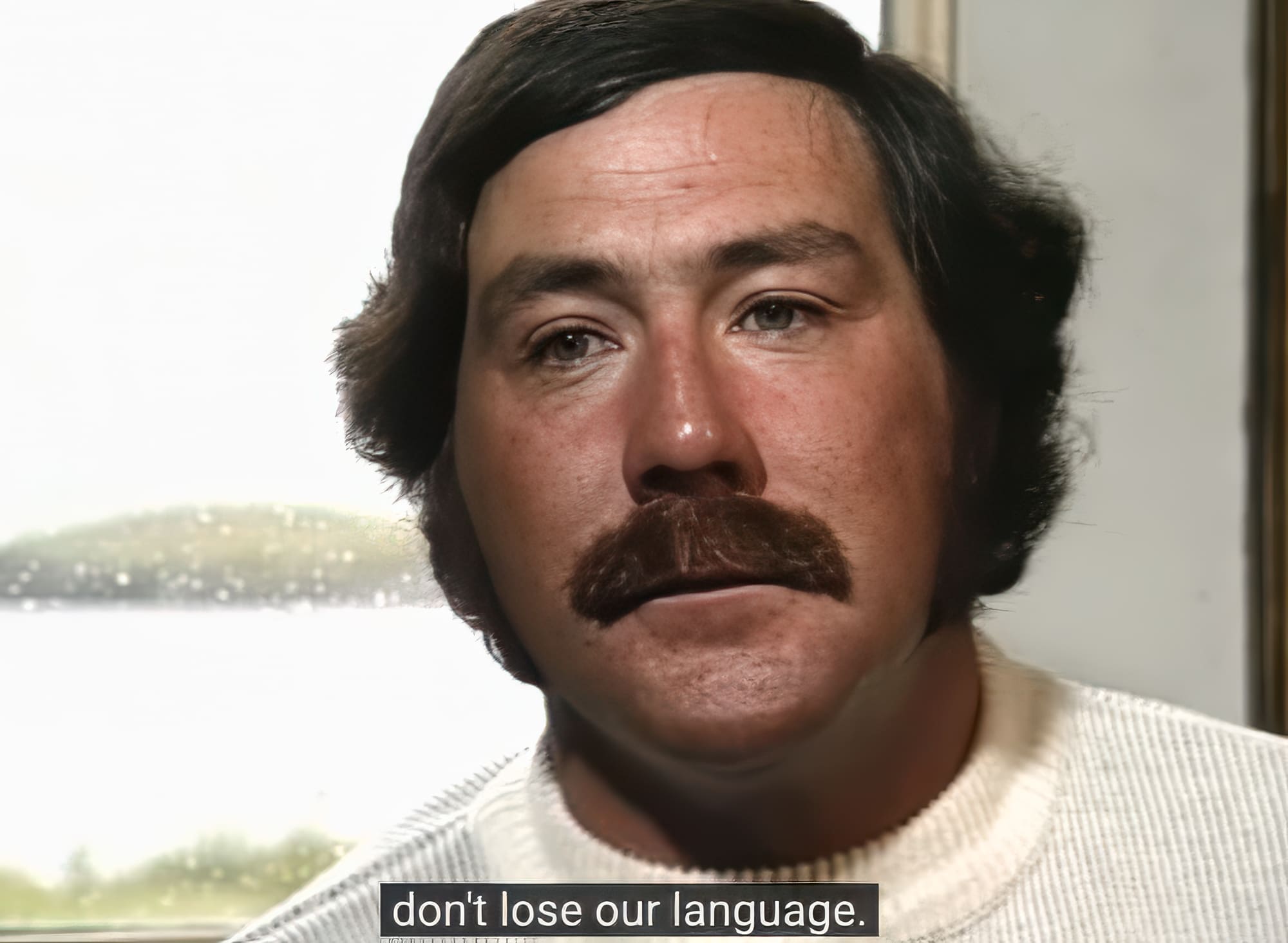
We were interviewing Donnel Dana — a Passamaquoddy Native American man for the North Atlantic episode.
The Passamaquoddy are known as “the People of the Dawn.” Their traditional homeland sits in the easternmost region of North America, and they are the first to see the sun in the continental United States.
I’d shot some beautiful footage of them fishing as the sun came up — fishermen and their nets breaking those early morning shafts of golden light.
It was a dream shoot. Until the interview.
Our crew had learned how to shoot well, sequence scenes, and tell stories with the camera.
But no one had taught us how to properly set up and light an interview.
So I did what I’d seen other camera people do: I placed our 650-watt tungsten Lowel Tota light on a stand and bounced it off the wall behind me. I also put Donnel right up against a window. The light was hot. We were hot. The room was steamy, and the window dripped. So did he.
The interview content was great. The footage surrounding it was incredible. But I was always embarrassed by how that interview looked.
I vowed right there to learn everything I could about lighting.
Over the years I dove into every workshop I could find, read books and magazines, and learned from mentors. I got onto sets with cinematographers like Vilmos Zsigmond and picked the brains of patient DPs and gaffers who were further along in their careers than I was. I absorbed everything.
And slowly, things started to click.
I came to learn that the simplest lighting is often the most beautiful – especially when it came to interviews. I also learned that lighting an interview is like a microcosm for lighting any scene. The principals are the same.
Little by little my lighting improved, and with it my on-set confidence, and my clients.
Understanding the fundamentals of lighting, and creating a system around it, changed everything for me.
The Craft → Clients → Career Connection
The anxiety I used to feel walking into an unfamiliar location started to quiet down. Not all at once – but shoot by shoot, as the system got more reliable, I got calmer. And when you’re calmer on set, you’re more present. You’re thinking about the client and the subject instead of quietly panicking about the light.
I think clients feel that, even when they can’t name it.
The work started attracting different work. Better budgets. Clients who showed up prepared. Shoots where I actually enjoyed myself. I noticed that as my rates crept up, the difficult-client energy I’d gotten used to mostly disappeared. Nobody ever told me that would happen — I just started to see the pattern.
I’m not going to pretend it was a straight line. Freelancing never is. But over the years the projects got bigger, the relationships got better, and I got to do work I’m genuinely proud of — for clients like HBO, ESPN, and National Geographic, and for commercial clients closer to home who became long-term partners.
It all traces back to that embarrassing interview in the Northeast. The vow I made in that steamy room.
Craft isn’t just about the shot. It turned out to be the foundation everything else was built on.
